Knowledge loss is one of those organizational problems that every executive intuitively understands and almost no one treats as a board-level priority. It exists in the gap between the things companies formally manage and the things that actually determine their long-term performance.
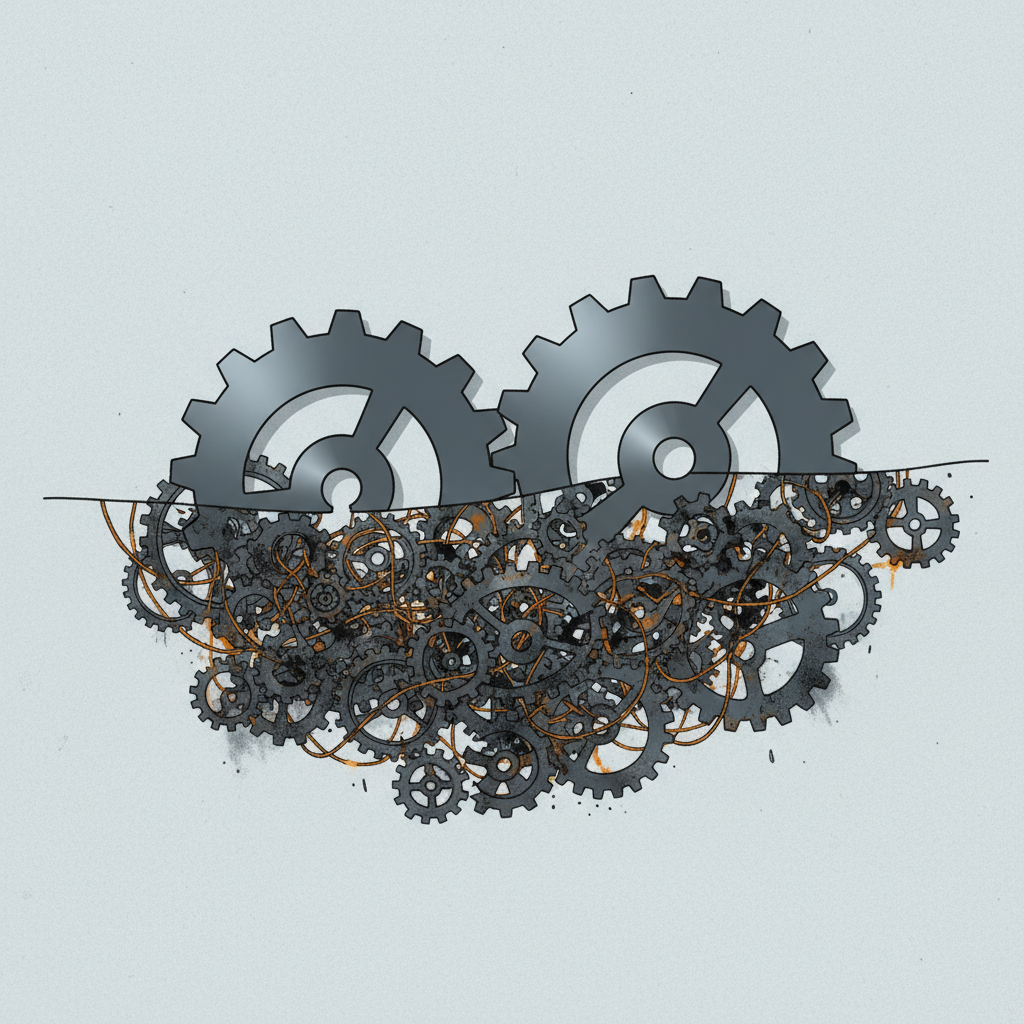
Consider what an organization actually loses when an experienced person leaves. The visible loss is a role that needs to be filled. The invisible loss is everything that person understood about how the business works that was never written down, never transferred, and never explicitly valued until it was gone. Client relationships built on years of contextual trust. Judgment about which internal stakeholders need to be brought in on which decisions and why. The intuitive understanding of where the business model is fragile. These are not soft considerations. They are the determinants of strategic execution quality — and they erode silently, one departure at a time.
What makes this a CEO issue rather than an HR issue is the compounding nature of the loss. Each individual instance seems manageable. Over five years, the cumulative effect on strategic capacity can be substantial. An organization that has experienced significant turnover in its senior and mid-senior layers is not the same organization it was at the beginning of that period — even if the headcount is identical. It has different knowledge, different judgment, and different institutional memory. Whether that represents an improvement or a degradation depends entirely on how deliberately the transition was managed.
Most companies manage it poorly — not through negligence, but through misclassification. Knowledge continuity is treated as a talent management concern when it is fundamentally a strategic infrastructure concern. This means it gets addressed through onboarding programs and documentation policies rather than through the kind of deliberate architectural thinking that governs other strategic assets.
The analogy that is useful here is intellectual property. Companies invest substantial resources in protecting the technical IP that gives them competitive advantage — patents, trade secrets, proprietary processes. But the organizational knowledge that enables them to create that IP in the first place is often entirely unprotected. It walks out the door with people. It degrades through turnover. It becomes inaccessible as the organization grows and specializes. And unlike technical IP, there is no formal system for registering it or asserting its value.
The CEOs who treat this well don't necessarily have a named program or a formal initiative. What they have is a different frame: they understand that their organization's accumulated intelligence is an asset that requires active stewardship. They make decisions about senior transitions, organizational structure, and knowledge-sharing infrastructure with that awareness embedded. They ask, before approving a major change, what it will cost in institutional knowledge — not just in compensation or operational continuity.
That frame changes the quality of decisions. And over time, it is one of the cleaner predictors of which organizations build durable strategic advantages and which ones keep relearning the same expensive lessons.