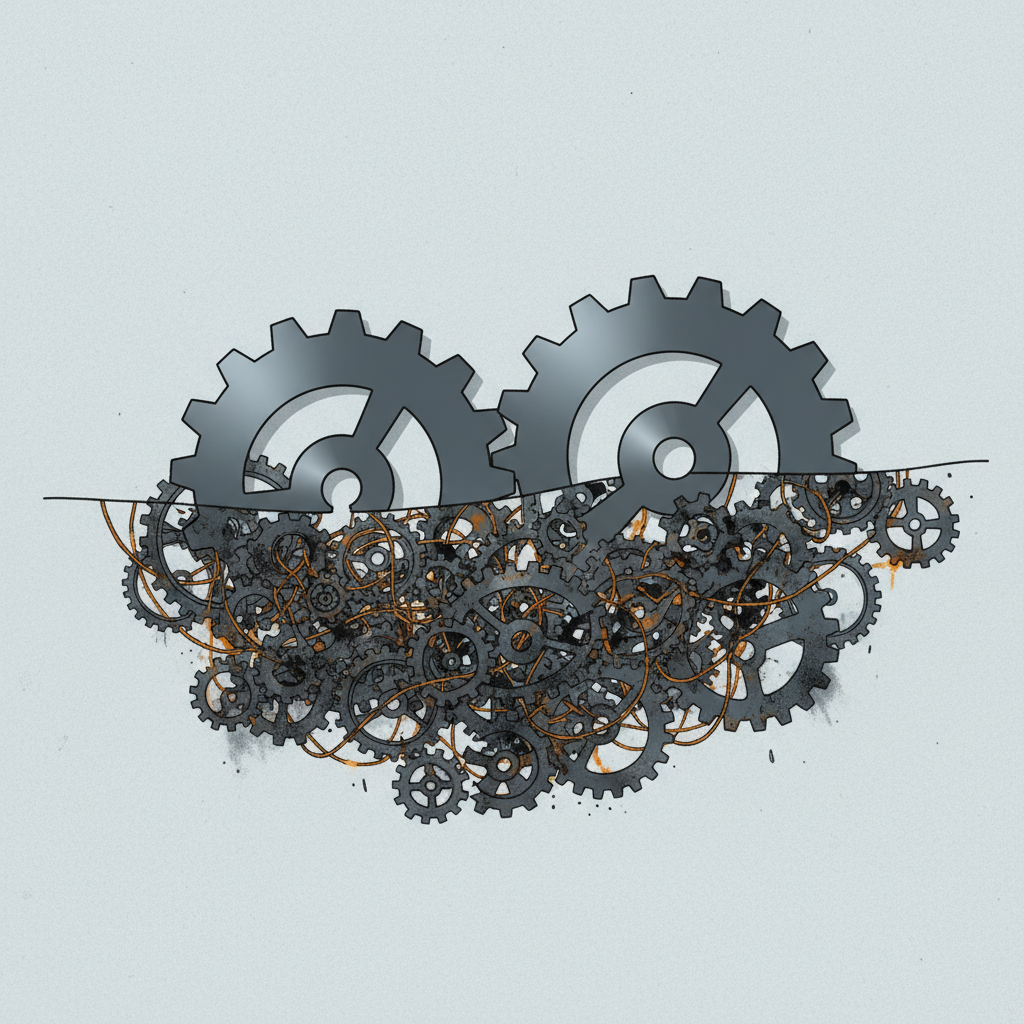
The talent acquisition process, as most companies practice it, begins at exactly the wrong moment: when a role is open. By that point, the organization is already operating with a deficit — a gap in capability that creates pressure on existing team members, slows down decision-making, and forces a rushed process in which "good enough, fast" consistently beats "right, considered." The quality of the eventual hire suffers accordingly.
This is not a criticism of recruiters or HR processes. It is an observation about the frame within which those processes operate. When talent decisions begin with a vacancy, the entire activity becomes reactive — a response to an existing problem rather than a proactive alignment between organizational capability needs and the people who can meet them. The consequences of that frame extend well beyond any individual hiring decision.
Consider what is actually happening when an organization frequently finds itself hiring urgently for critical roles. It means the organization lacks a clear, maintained view of where its capability gaps are likely to emerge. It means there is no systematic intelligence about how the internal talent landscape is evolving — who is developing, who is plateauing, where future leadership will come from, and where external talent will need to supplement internal development. It means that some of the most consequential investment decisions a company makes — talent decisions, which determine what the organization will be capable of doing over the next three to five years — are being made with less information and less lead time than decisions about much smaller operational matters.
The companies that consistently build stronger organizations approach talent with a different temporal orientation. They think about capability needs before they become vacancies. They maintain an active understanding of how their organizational requirements are evolving — shaped by strategy, by market conditions, and by the natural trajectory of their current talent base. They identify, early, where gaps are forming and create the conditions to address them deliberately rather than reactively. And when vacancies do occur, they are rarely surprised, because the strategic context for those hires has already been developed.
This is not about elaborate succession planning bureaucracy. It is about intelligence — specifically, the organizational intelligence to understand the relationship between current capability and future strategic requirements, and to take deliberate action on that understanding before circumstances force the organization's hand.
The analogy is agricultural rather than mechanical. A farmer who only plants in response to an empty pantry will always be harvesting under pressure and eating suboptimally. A farmer who understands the seasons, plans ahead, and tends to conditions that will produce abundance has a fundamentally different relationship with scarcity. Talent works the same way. The organizations that are best at it think like farmers, not like procurement departments responding to stockouts.
For executive teams, the practical question is: at what point in our current planning cycle does talent intelligence genuinely inform strategic decisions — not as an afterthought, but as a genuine input? If the honest answer is "late" or "rarely," the cost of that timing gap is almost certainly larger than it appears.