There is a question that rarely appears in board risk assessments, despite being one of the more consequential vulnerabilities a company can carry: how much of what makes this organization function is stored exclusively in the minds of a small number of individuals?
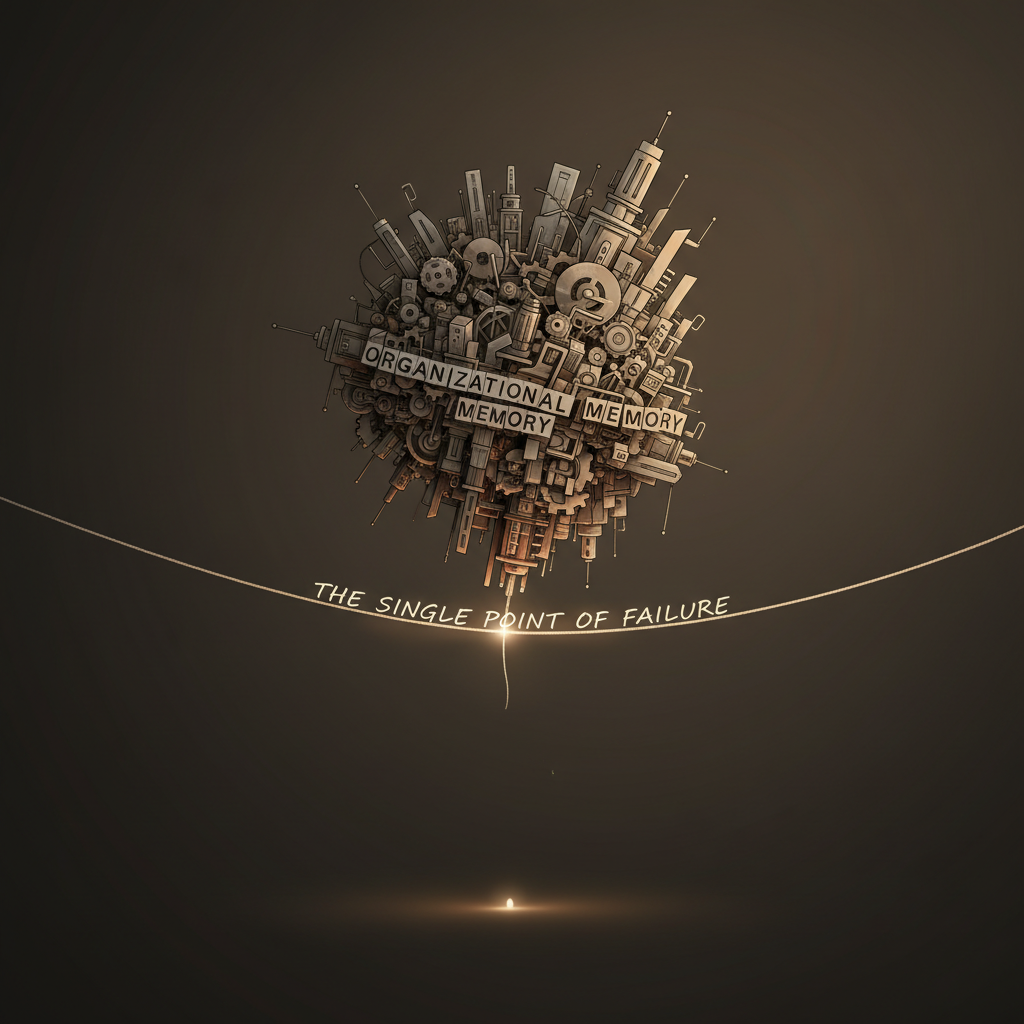
In most companies, the honest answer is: more than is comfortable to acknowledge. The sales director who has managed the key account for eleven years and carries an intuitive understanding of what that client needs that has never been written down. The operations manager who knows exactly which supplier relationships require special handling and why, based on a history that predates the current CRM. The CFO who understands the business model's pressure points with a depth that no financial model fully captures. These individuals are not redundant roles. They are, in a very literal sense, the organizational memory. And that concentration represents a structural fragility that most leadership teams don't address until something breaks.
The usual trigger is departure. Someone critical leaves — through resignation, retirement, or illness — and the organization suddenly confronts the full cost of that dependency. Projects stall. Client relationships deteriorate. Decisions that would have been obvious to the departing individual take weeks of reconstruction. The institutional knowledge that enabled performance was entirely personal, and it left with the person.
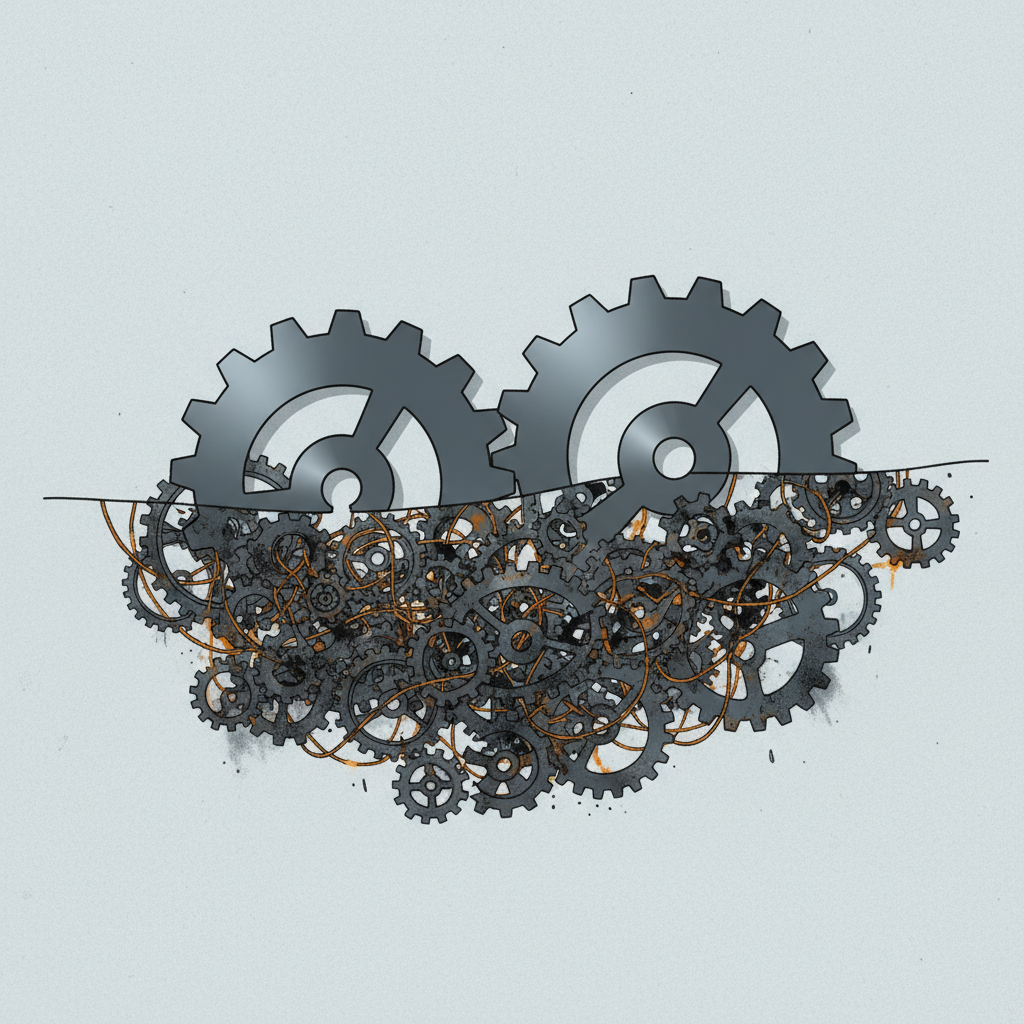
What makes this particularly difficult to manage is that the loss is often invisible until it occurs. The individual is present. Performance looks normal. There is no signal that something critical is at risk. This is analogous to a load-bearing element in a building that has no visible indicator of stress — everything looks stable until the structure fails.
The deeper issue is that this kind of fragility is often treated as a talent problem when it is actually an organizational design problem. The solution is not simply to retain critical individuals — though that matters — but to build systems that don't require any single person's continued presence to function at the required level. That means creating the conditions under which knowledge can migrate from individuals into shared operational structures, without losing the nuance and context that made it valuable in the first place.
This is harder than it sounds. The knowledge that most matters in organizations tends to be the hardest to transfer: it is contextual, relational, and often tacit. It is the understanding of why a particular client relationship works the way it does, not just the facts of the relationship. It is the judgment about when a process exception is warranted, not just the documented rule. Capturing this kind of knowledge requires more than documentation — it requires deliberate structures for knowledge sharing, institutional incentives for making expertise visible, and leadership cultures that treat continuity as a strategic responsibility.
For executives, the practical starting point is a candid question: if three of our most critical people left tomorrow, what would we lose that is not captured anywhere else in the organization? The answer tends to be more revealing than any formal risk register. And acting on it — not as a crisis response but as a structural priority — is one of the more defensible investments a leadership team can make.