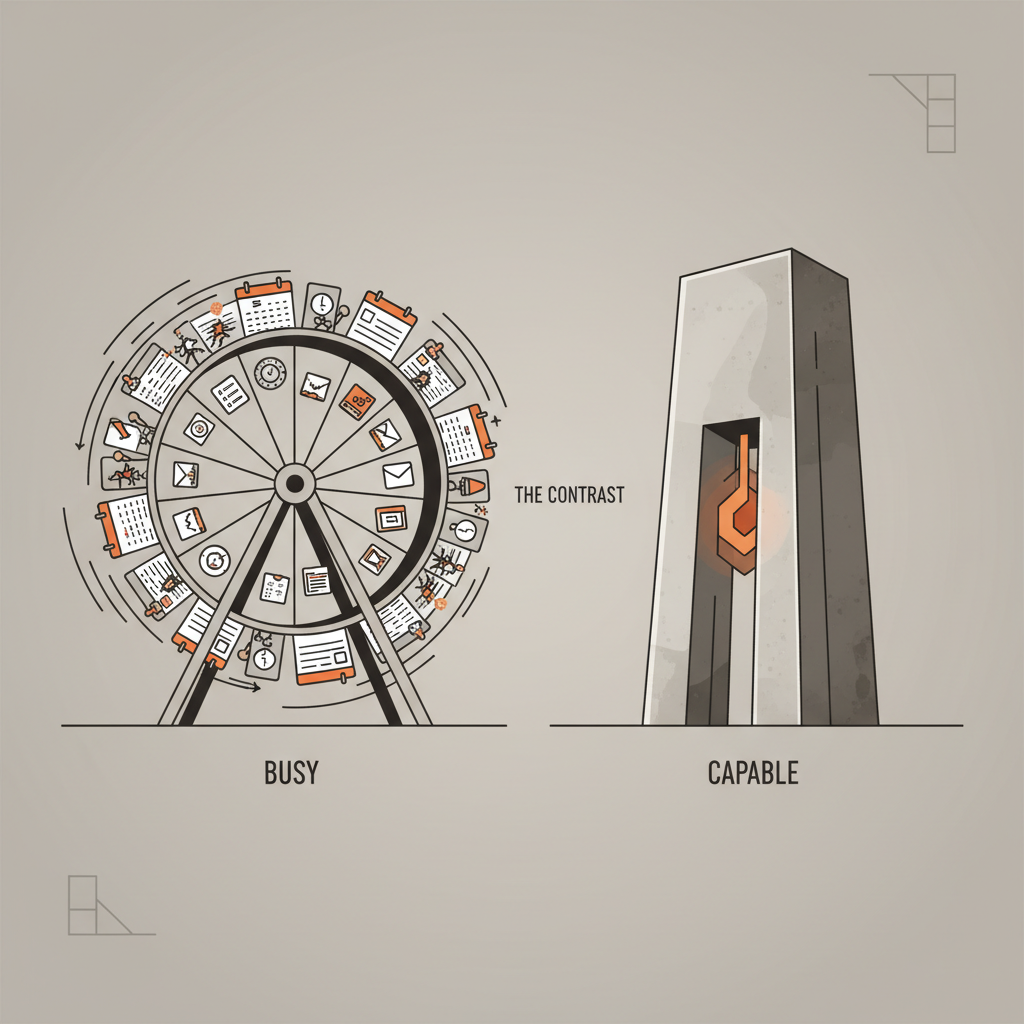
There is a particular kind of organizational flattery that leadership teams tend to offer themselves: the company is busy, therefore the company is capable. Calendars are full. Initiatives are running. People are working hard. The organization feels productive. And in that feeling, a critical distinction gets lost — between the activity of working and the development of the organizational capacity to work better.
Capability is not the same as current performance. Performance is what the organization can do today, given its existing people, processes, and institutional knowledge. Capability is what it can do tomorrow — and next year, and in three years — as a function of whether it is systematically building the organizational conditions that make sustained high performance possible. These two things can move in opposite directions. A company can show strong quarterly results while quietly degrading the capability base that produced them. It can be highly active while becoming structurally less capable.
This divergence is rarely visible in standard metrics. Financial performance, project completion rates, and customer satisfaction scores measure outputs. They don't measure whether the organization is becoming more capable of producing those outputs in the future, or whether the current performance is drawing down capability reserves that will eventually show up as a strategic liability.
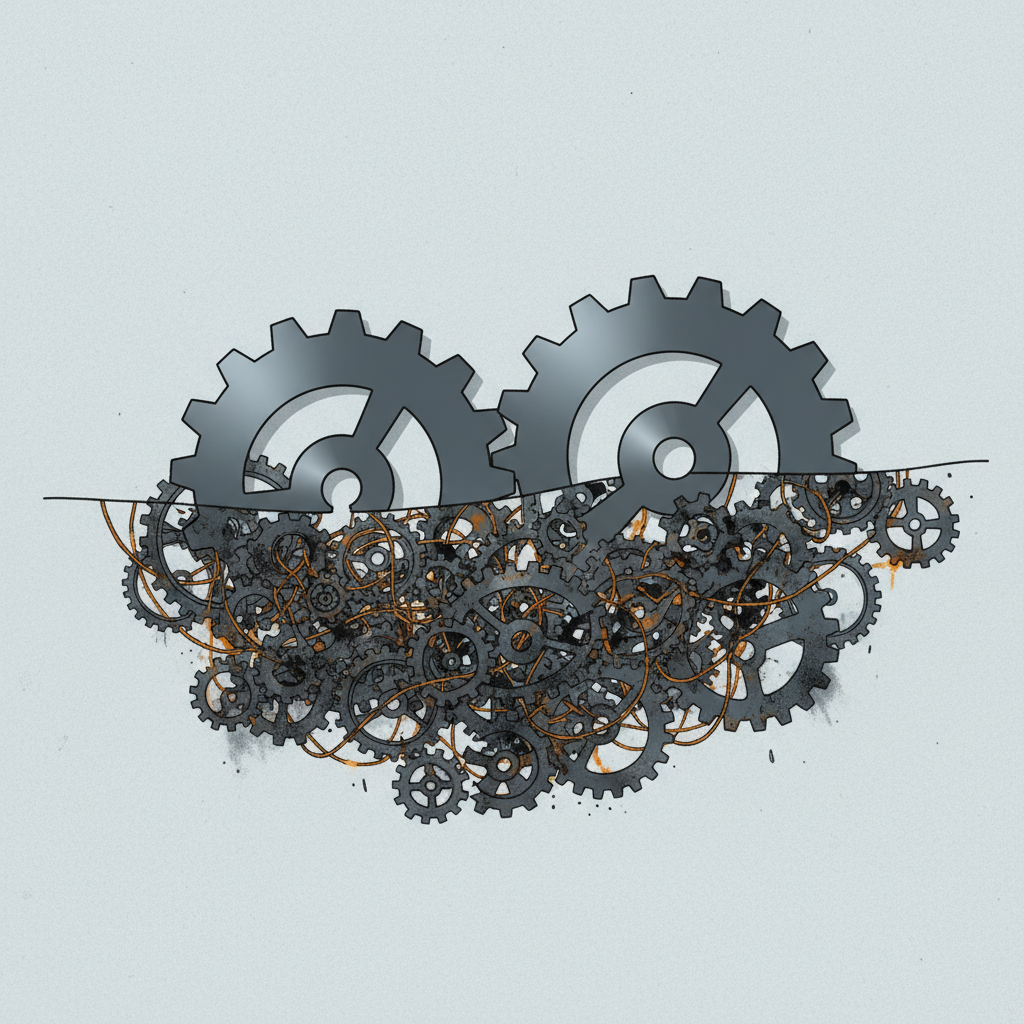
The organizational version of this problem looks something like this: a company consistently hits its numbers by deploying its most experienced people on urgent priorities, leaving less experienced people without the developmental exposure that would build the next generation of capability. The results look good. The capability pipeline quietly weakens. Five years later, leadership wonders why the bench is thin and why execution has become harder despite the investment in headcount.
A useful frame comes from engineering. The difference between efficiency and resilience is one of the more instructive tensions in systems design. An efficient system is optimized to perform well under normal conditions. A resilient system is designed to maintain function under stress, adapt to changes in operating conditions, and recover when something fails. Organizations that optimize exclusively for near-term efficiency tend to do so by reducing the slack, redundancy, and developmental investment that make resilience possible. They get faster at running in a straight line. They become more fragile when the line bends.
The companies that build genuine long-term capability don't do so by running fewer initiatives or being less active. They do it by making capability development a first-order organizational concern — alongside performance — rather than something that gets attention when performance pressure eases. They ask, alongside "are we hitting our targets?", a different set of questions: Is the organization learning from what it's doing? Are the people and systems that produce our current performance developing in ways that will make them more capable? Are we building institutional knowledge or consuming it?
Those questions don't fit easily into a quarterly review. But the organizations that ask them consistently tend to be the ones that, five and ten years out, have built something that their competitors struggle to replicate — not because of a single strategic insight, but because of the cumulative effect of a sustained investment in organizational capability.