Organizations have become sophisticated consumers of individual learning. The market for professional development, leadership training, and skills education has never been larger. Companies invest heavily in developing the capabilities of their people — and there is genuine value in those investments, when they're well-designed and well-targeted.
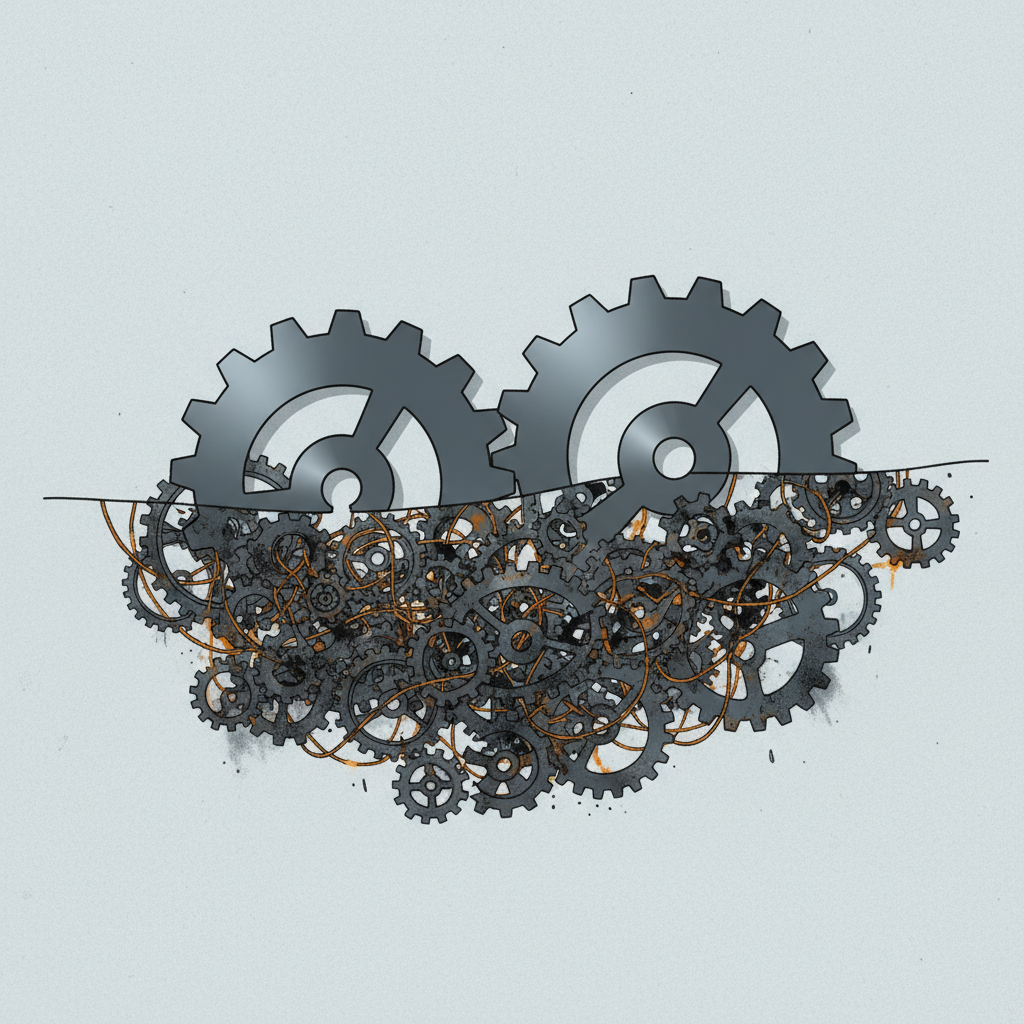
The frontier that most organizations haven't crossed is different: making the organization itself capable of learning, rather than just its individual members. This is not a semantic distinction. An organization that learns retains what it learns. It applies prior experience systematically to new situations. It builds knowledge as a cumulative asset rather than a renewable resource that gets reconstructed each time the people who hold it move on.
Most companies are learning organizations in the way that a busy restaurant is a learning environment: individual cooks develop skills over time, but when they leave, the knowledge leaves with them, and the next person starts from close to the beginning. The restaurant doesn't learn. It rehires and retrains. The cost of this cycle — in performance, in time, in the permanent loss of contextual expertise — is substantial and almost entirely invisible in standard financial reporting.
What would it look like for an organization to actually learn? Not in the abstract sense of "continuous improvement" that appears in mission statements, but in the operational sense: experiences producing insights that get retained in organizational systems, decision histories that inform future choices, hard-won understanding of markets and customers and competitors that accumulates rather than evaporates. This requires something more than documentation. It requires the creation of institutional structures that make organizational experience retrievable, relevant, and actually used.
The companies that are closest to this model share a characteristic that is easy to undervalue: they treat the transfer of knowledge between people and generations of employees as a core operational function, not as a discretionary activity. When a market entry succeeds or fails, they don't just move on — they extract the learning explicitly and embed it in ways that the next team to face a similar decision can access. When an experienced leader transitions out, the exit isn't just logistically managed — it's treated as a knowledge transfer event with organizational consequence.
This is not nostalgic conservatism. It is not about slowing down or resisting change. The organizations that learn most effectively are often the most adaptive — precisely because they don't waste energy relearning what they already know. They enter new situations with more usable context, make better first decisions, and course-correct faster because they have a richer baseline of organizational experience to draw from.
The frontier is not a technology. It is not a program. It is a different relationship between an organization and its own accumulated experience — one that treats what has been learned as worth preserving, and what will be learned as worth capturing. That shift in orientation, consistently applied, is one of the more durable competitive advantages available to any company that decides to pursue it.