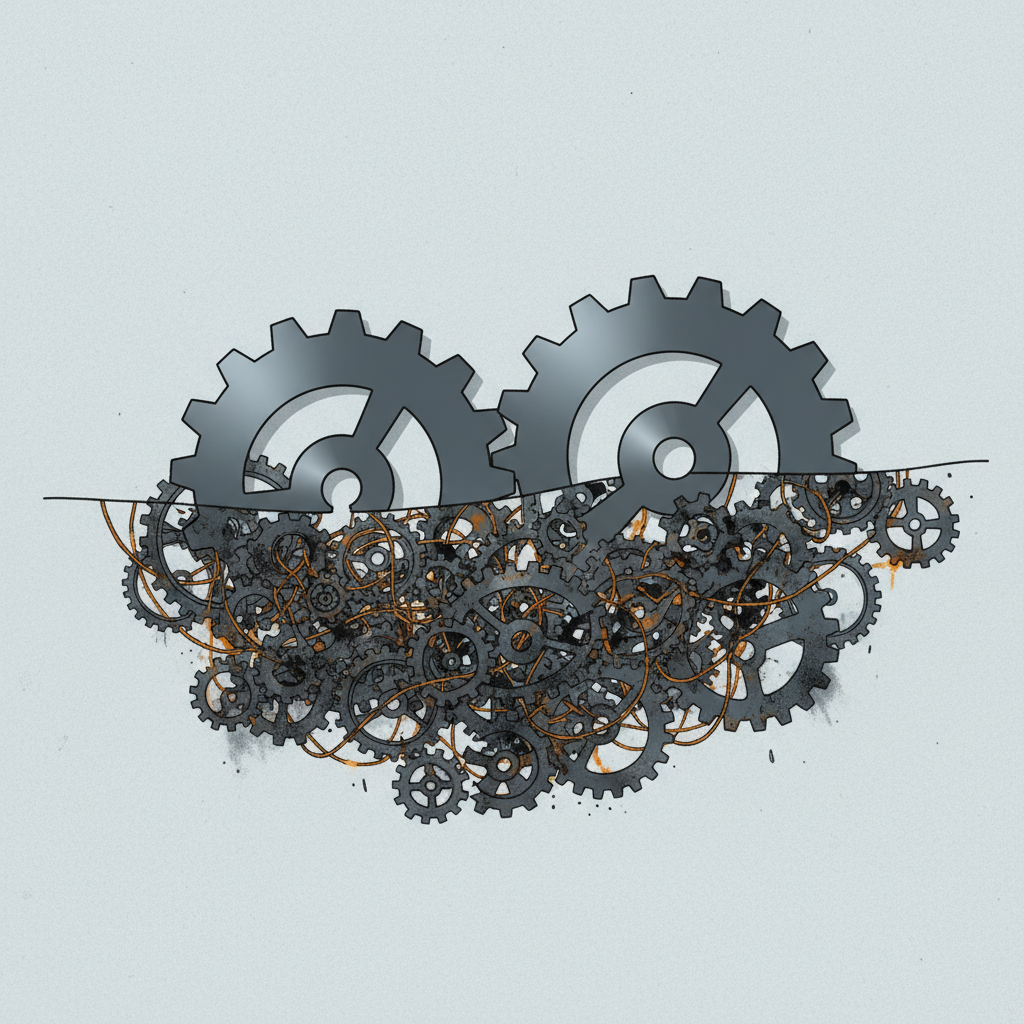
There is a form of organizational waste that appears nowhere in standard financial reporting and rarely makes it onto leadership agendas until it reaches a point of obvious dysfunction. Call it institutional amnesia: the chronic condition in which an organization repeatedly acquires knowledge, fails to retain it, and then pays again to learn the same things under only marginally different circumstances.
It looks like this. A company enters a new market, encounters a specific set of client objections, develops effective responses, and builds a sales approach that works. The team that built it disperses — some promoted, some departed — over the following two years. When the company later tries to expand further into the same market, the new team begins the discovery process largely from scratch. The objections are the same. The effective responses are largely the same. But the knowledge that would have accelerated the effort by eighteen months is simply not available, because it lived in people rather than in organizational systems that outlast people.
Multiply that across every domain where an organization accumulates and then loses contextual expertise — client relationships, supplier dynamics, regulatory environments, product development lessons, operational adaptations — and the cumulative cost becomes substantial. What makes it particularly insidious is that each individual instance feels like a manageable inefficiency. The organization doesn't experience it as waste. It experiences it as normal: this is what starting a new initiative feels like, this is what it costs to bring new people up to speed. The benchmark is comparison with other companies, not with what the organization's own accumulated experience could have made possible.
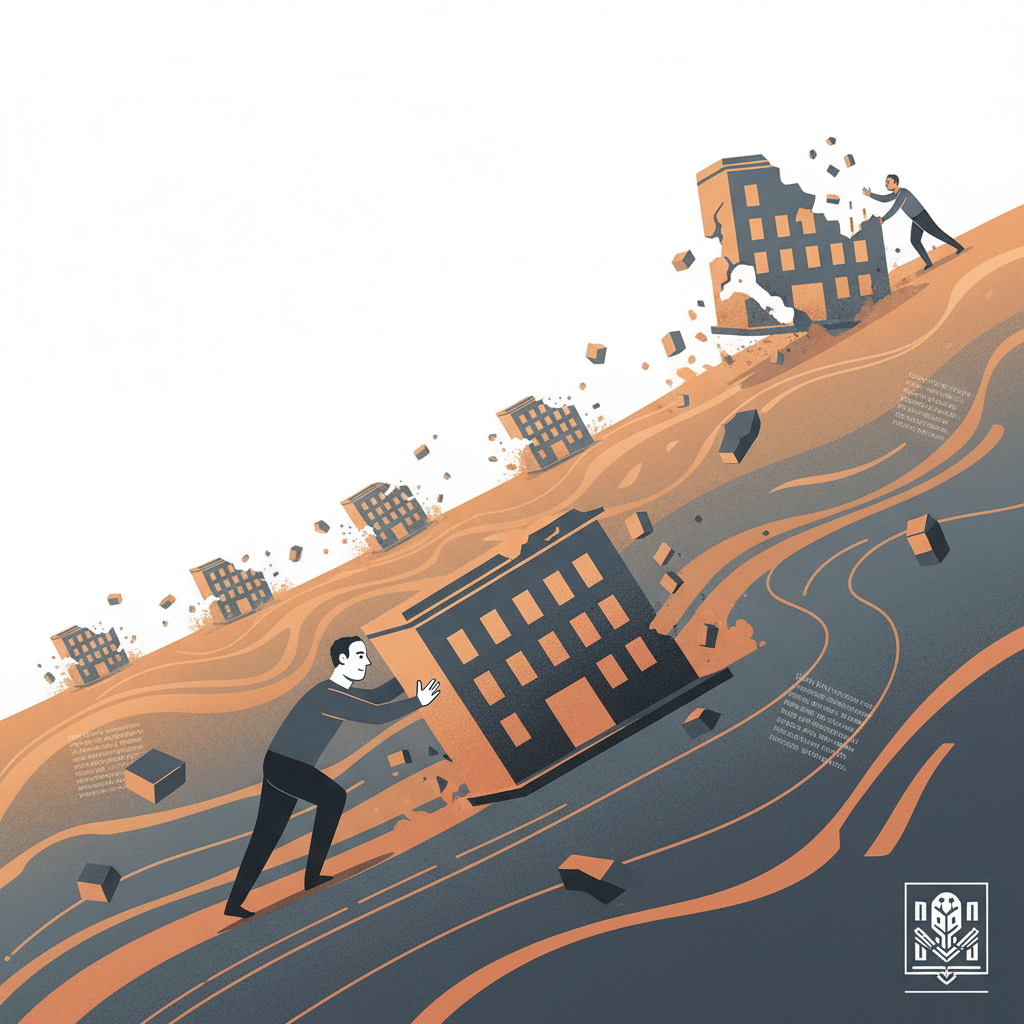
The Greek myth of Sisyphus offers a useful image, though the organizational version is arguably more tragic. Sisyphus was condemned by the gods to roll a boulder up a hill endlessly, watching it roll back each time. Organizations that lose their institutional knowledge face something similar — but there is no divine condemnation involved. The repetition is self-imposed, through the consistent failure to build systems that make accumulated learning persist and compound.
What would it mean to actually escape this pattern? It requires treating organizational experience as an asset — something that can be deliberately cultivated, protected, and made available to future decision-makers — rather than as a byproduct of the work that evaporates when the people who generated it move on. This is harder than it sounds, because the knowledge that matters most tends to be contextual and relational rather than procedural. It is the understanding of why a particular approach worked in a particular context, not just the documentation that it worked.
Organizations that do this well build a different relationship with their own history. They invest in making experience retrievable. They create deliberate structures for knowledge transfer at points of transition. And they measure organizational learning not by the sophistication of their training programs but by whether the organization is faster and better at the second attempt than the first — regardless of whether the people involved are the same.
That metric is harder to track. It is also a cleaner signal of whether the organization is actually learning, or whether it is simply paying the same tuition, over and over, for a degree it never quite earns.