There is a fantasy that recurs at every major technology inflection point: that the new capability will solve the organizational problems that have resisted solution until now. Enterprise software would align the company. Big data would clarify strategy. Digital transformation would modernize culture. Each wave brought genuine capability. And each wave also revealed, with uncomfortable clarity, that the organizational problems it was supposed to solve had roots that technology couldn't reach.
Artificial intelligence is the current version of this pattern. The capability is real and, in many domains, genuinely transformative. The fantasy is that it will compensate for organizational conditions — fragmented authority, ambiguous priorities, unclear accountability, siloed knowledge — that have nothing to do with computational power and everything to do with how human systems are designed and led.
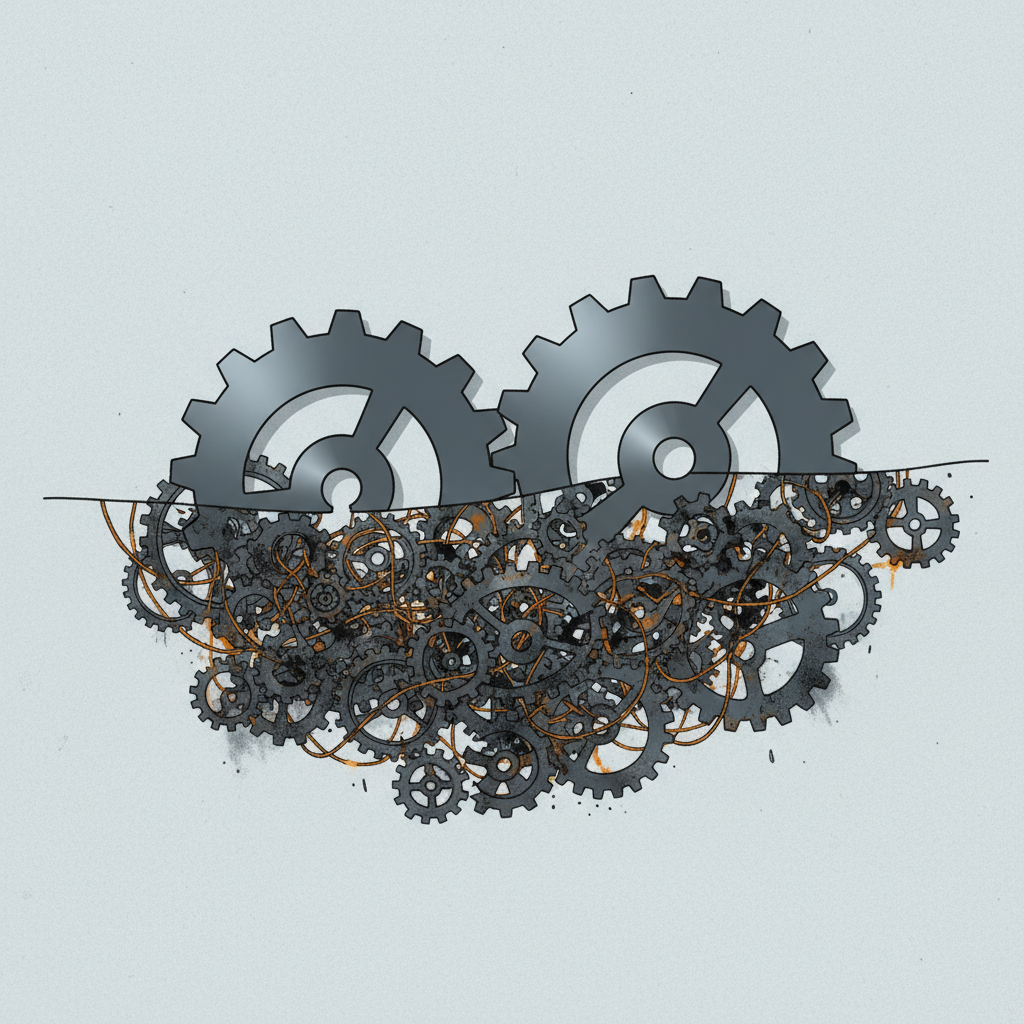
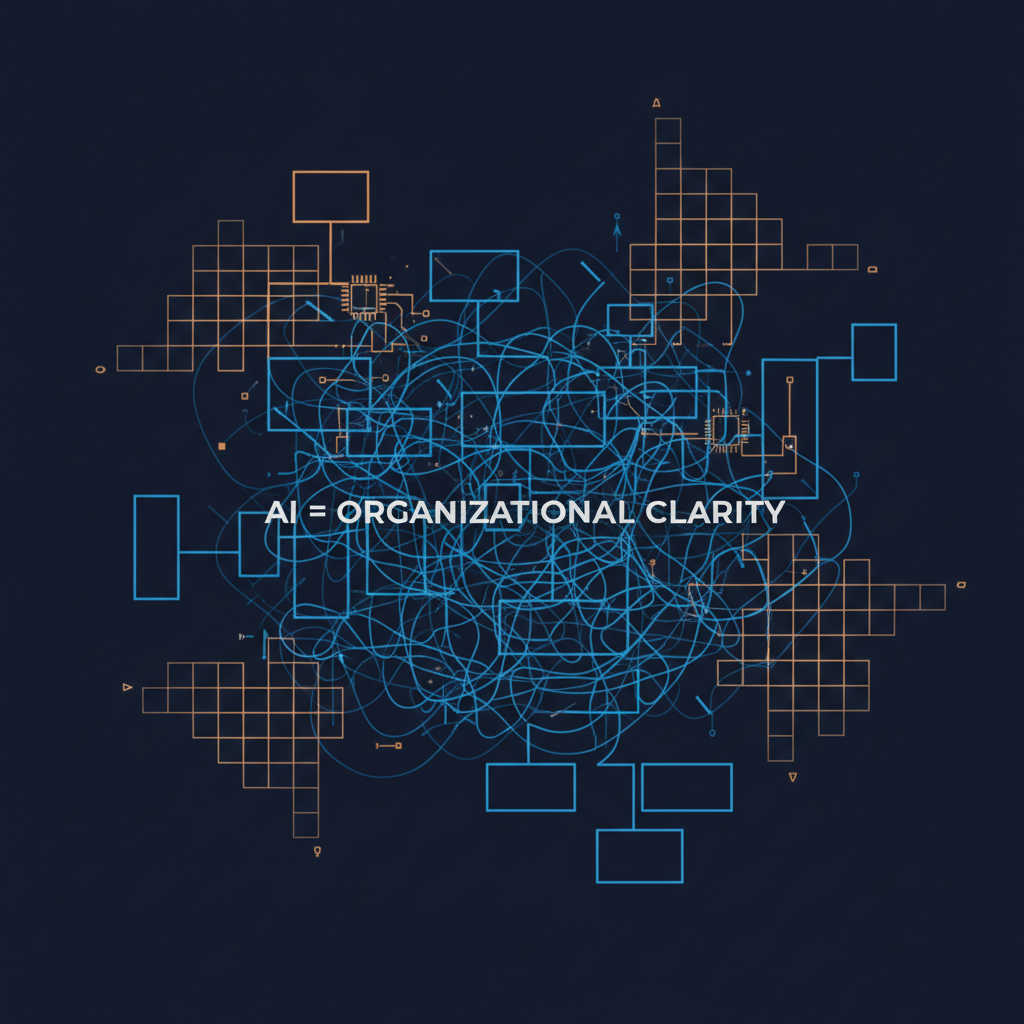
The problem with applying AI to an organizationally confused company is that AI amplifies whatever it encounters. If the underlying processes are clear, consistent, and well-understood, AI can accelerate and improve them substantially. If the underlying processes are unclear, contested, and poorly documented — which describes the operating reality of a significant proportion of large organizations — AI will accelerate confusion rather than resolve it. It will generate output faster, at higher volume, from premises that were never sound.
There's a version of this that appears in enterprise AI deployments with regularity. A company implements an AI-assisted decision support system. The system is technically sophisticated. But the decisions it's supposed to support have never been clearly defined. The inputs it requires — consistent data, agreed definitions, clear ownership — don't exist in the required form. The people expected to use it operate from different mental models of what they're trying to achieve. The system works as designed. The organization doesn't change. And after a period of expensive frustration, the technology is blamed for problems that were organizational from the beginning.
This matters particularly at the leadership level. The decisions that AI can most plausibly enhance at senior levels — strategic resource allocation, talent decisions, risk assessment — are precisely the decisions that require the highest degree of organizational clarity about priorities, values, and what the company is actually trying to achieve. In the absence of that clarity, AI-assisted analysis produces more sophisticated versions of the same debates that were happening before. The disagreement gets better data. It doesn't get resolved.
None of this is an argument against AI adoption. The companies that will benefit most from AI are the ones that have already done the harder work: clarifying what they're trying to achieve, building shared mental models across leadership, and creating the organizational conditions under which new capabilities can be applied with precision rather than with hope. That work is not technology work. It is organizational work. And it is, for most companies, the more urgent priority.
The executives who understand this are not slower to adopt AI. They are more deliberate about the sequence: first the organizational clarity, then the technology leverage. That sequence is less exciting to announce. It is substantially more likely to produce results.